

📝 Disclaimer: The content on this site is for informational and design inspiration purposes only and does not constitute professional architectural, engineering, or construction advice. Always consult with a certified contractor or professional before starting any major home renovation, electrical, or DIY projects.
* This post may contain affiliate links. As an Amazon Associate, we earn from qualifying purchases at no extra cost to you.
* This site uses AI technology for content assistance and illustrative imagery. Images are for demonstration purposes and do not depict real people or events.
How Dining Room Temperature Feels in the Overall Design
Thermal comfort in a dining room is not only a matter of air temperature. It also relates to how the room visually and sensorially suggests warmth, freshness, softness, or openness. Materials, window exposure, lighting color, furniture density, and textile accents can all influence the atmosphere people perceive while seated at the table.
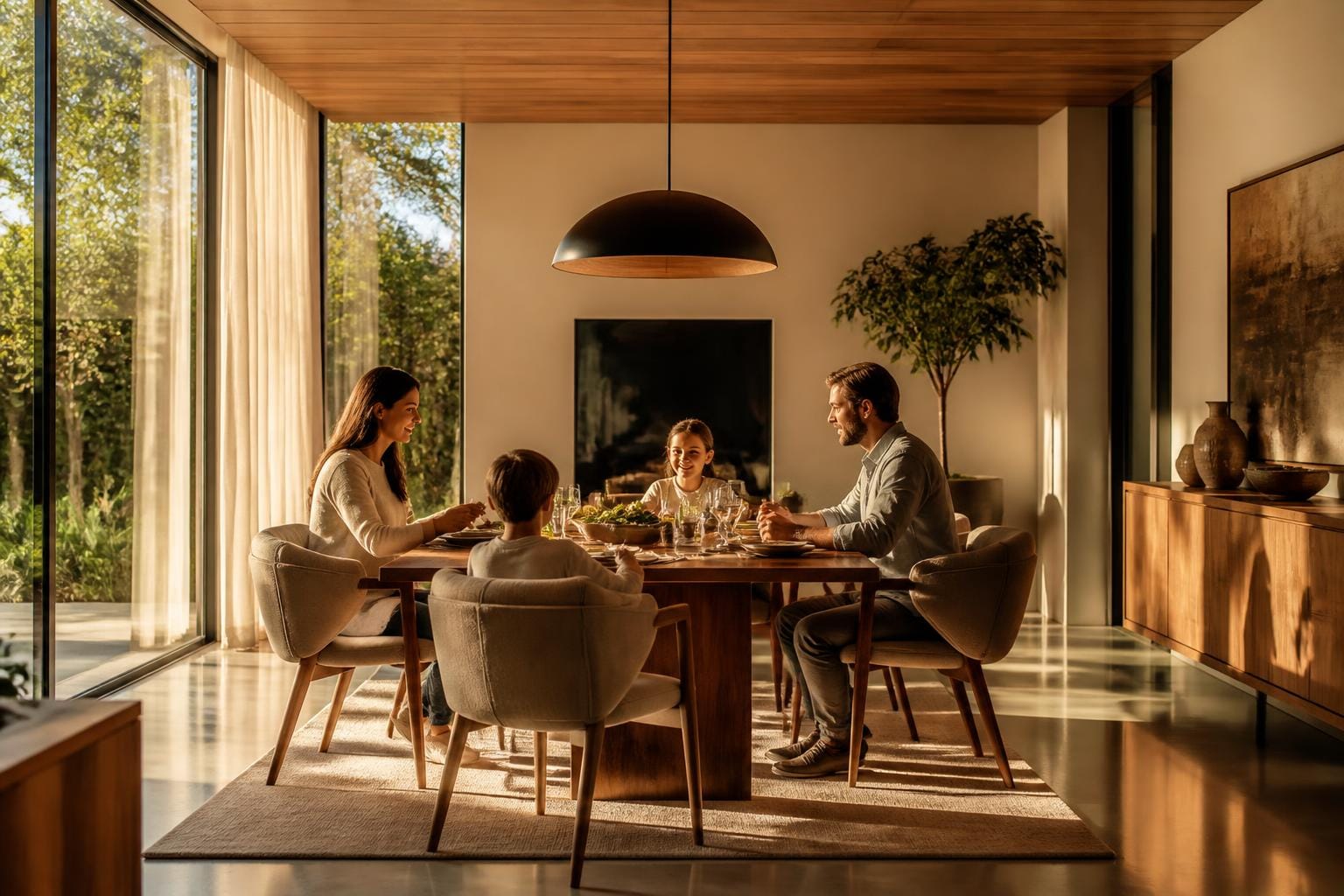
A room with pale surfaces, reflective details, and generous daylight may feel visually cooler and more open. Deeper wood tones, upholstered seating, layered curtains, and warm-toned illumination can create a more enclosed and softly heated impression, even when the physical temperature is not being discussed.
Materials and Surface Impressions
Surface character plays a noticeable role in the way a dining area is experienced. Smooth stone, glass, polished metal, and glossy finishes often convey a crisp or cool visual quality. Their reflective surfaces can make the room appear brighter and less visually dense.
Wood, woven fibers, matte ceramics, and softly textured upholstery tend to introduce a warmer sensory language. A substantial dining table can add visual weight, while lighter surfaces may preserve a more airy appearance. The relationship between these finishes often matters more than any single material.
Color also contributes to the impression. Terracotta, muted ochre, clay, caramel, and warm beige can make a dining room seem enveloping. Blue-gray, soft white, pale green, and charcoal may suggest a fresher or calmer environment. Neutral palettes can move in either direction depending on their undertones and surrounding textures.
Furniture, Windows, and Seating Atmosphere
Furniture placement affects how temperature is perceived through visual density and openness. A compact arrangement with closely related forms may feel intimate and sheltered. More visible floor area, open sightlines, and slender furniture profiles can give the room a lighter, airier character.
Seating materials shape the immediate experience around the table. Upholstered chairs introduce softness and visual insulation, while wood or metal seating presents a firmer, cleaner appearance. A rug beneath the dining set can visually gather the furniture into a warmer zone, especially when its pattern and texture relate to the table and surrounding surfaces.
Windows create another layer of contrast. Bright daylight, uncovered views, and pale curtains can make the dining room feel open and refreshed. Draped textiles, filtered light, and darker framing elements may produce a more intimate atmosphere. These impressions vary with the season, time of day, and orientation of the room.
Lighting and Seasonal Mood
Lighting changes the apparent temperature of colors and materials. Warm, low-level illumination can bring out amber tones in wood and soften the appearance of textured surfaces. Cooler or more neutral light can emphasize whites, grays, glass, and metallic accents.
A dining room may therefore shift character between daytime and evening. Natural light can highlight spaciousness and surface clarity, while pendant lighting or nearby lamps can create a concentrated pool of warmth around the table. Shadows also influence the mood: gentle, layered shadows often feel more relaxed than sharply defined contrasts.
The visual balance between bright windows and evening fixtures can help the room retain a coherent identity across different conditions. Materials that look cool in daylight may appear warmer under softer illumination, while saturated wall colors may become more dramatic as ambient light decreases.
Useful Visual Observations
- Room density: Closely grouped furniture and substantial forms can produce a sheltered, intimate impression, while open floor areas suggest greater visual airflow.
- Surface balance: Reflective finishes often read as crisp and cool; matte, grainy, or woven surfaces introduce softer warmth.
- Textile presence: Curtains, upholstered seating, and rugs add visual softness without changing the room’s structural layout.
- Color temperature: Warm neutrals and earthy shades tend to feel enveloping, while blue-based neutrals often appear fresher.
- Window relationship: Daylight and outdoor views can make the dining area feel open, whereas filtered light creates a more private atmosphere.
- Lighting mood: Gentle warm illumination emphasizes intimacy, while neutral illumination preserves clarity across pale and reflective surfaces.
- Table-centered zoning: A rug, coordinated lighting, or a stronger material contrast can make the dining table feel like a distinct atmospheric zone.
A Balanced Dining Room Atmosphere
A comfortable-looking dining room often combines visual openness with enough softness to prevent the setting from feeling stark. Wood may be paired with glass, upholstered chairs with a smooth table, or warm lighting with pale walls. These contrasts create variation without making the room appear visually unsettled.
The most noticeable impression comes from the interaction among surfaces, seating, textiles, daylight, and illumination. Thermal comfort as a design theme is therefore best understood as an atmospheric quality: a dining room can appear fresh, grounded, airy, intimate, or warmly layered through its visual composition.